MOPA Color Marking on Jewelry Metals

Shenzhen, China
Published: 7 月 3, 2026
MOPA Color Marking on Jewelry Metals
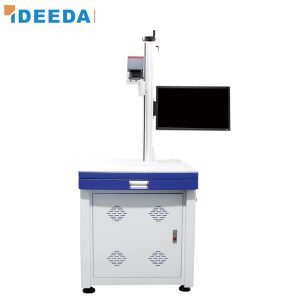
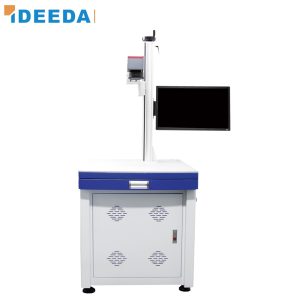
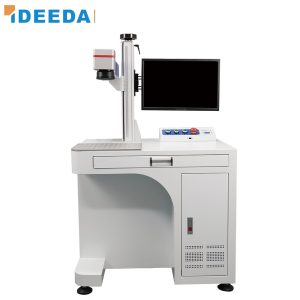
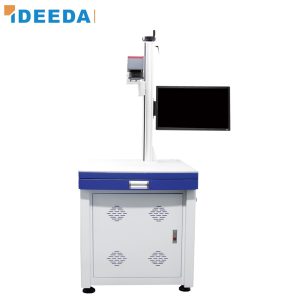
A MOPA (Master Oscillator Power Amplifier) fiber laser gives you something standard fiber lasers can’t: color. By adjusting the pulse width independently from frequency, a MOPA laser creates oxide layers of varying thickness on the metal surface, which produce different colors through thin-film interference.
Which Metals Support Color Marking?
| Metal | Color Capability | Quality |
|---|---|---|
| Stainless steel (304/316) | Excellent — gold, blue, red, green, purple, orange | Vibrant, consistent |
| Titanium | Excellent — blue, gold, purple, green | Very vibrant |
| Chrome-plated surfaces | Good — limited color range | Moderate |
| Gold | Very limited — slight color shifts | Not recommended |
| Silver | Not applicable | — |
| Platinum | Not applicable | — |
Important: Color marking works on stainless steel and titanium jewelry, not on gold, silver, or platinum. If you’re primarily marking precious metals, a standard fiber laser is sufficient. If you work with steel or titanium fashion jewelry, MOPA is a game-changer.
MOPA Color Marking Parameters
| Color | Pulse Width (ns) | Frequency (kHz) | Power (%) | Speed (mm/s) |
|---|---|---|---|---|
| Gold | 4–8 | 30–50 | 40–60 | 200–400 |
| Blue | 10–20 | 50–80 | 30–50 | 100–300 |
| Purple | 8–15 | 40–70 | 35–55 | 150–350 |
| Red/Orange | 2–6 | 20–40 | 50–70 | 150–300 |
| Green | 15–30 | 60–100 | 25–40 | 100–250 |
These are approximate starting values. Color results depend heavily on the specific alloy, surface finish, and ambient temperature. Always test and adjust.