Laser Classification: What the Numbers Mean

Shenzhen, China
Published: 7 月 3, 2026
Laser Classification: What the Numbers Mean
The IEC 60825-1 standard categorizes lasers into four classes based on their potential to cause harm. Here’s a quick rundown:
| Class | Power Range | Hazard Level | Typical Example |
|---|---|---|---|
| Class 1 | N/A (safe by design) | No hazard during normal use | Laser printer, CD player |
| Class 1M | Safe without optics, hazardous with | Eye hazard with magnifying optics | Some fiber communication equipment |
| Class 2 | < 1 mW visible | Low hazard (blink reflex protects) | Laser pointer, barcode scanner |
| Class 2M | < 1 mW visible, divergent beam | Hazardous with optical instruments | Some alignment lasers |
| Class 3R | 1–5 mW | Low risk, direct viewing hazardous | Surveying instruments |
| Class 3B | 5–500 mW | Eye hazard, skin hazard at higher powers | Industrial alignment lasers |
| Class 4 | > 500 mW | Eye, skin, and fire hazard | Laser marking, cutting, welding machines |
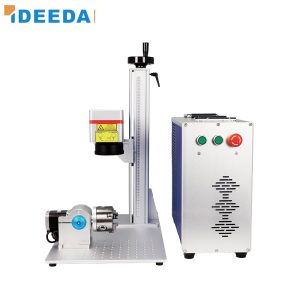
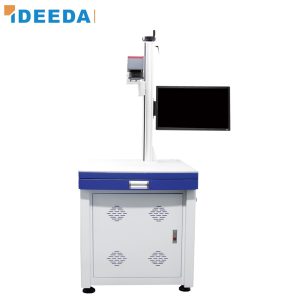
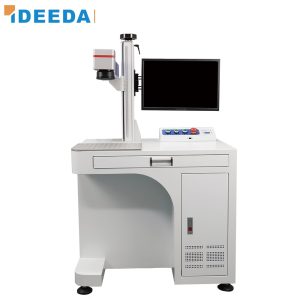
Every fiber laser marking machine from 20W to 100W+ falls under Class 4. There’s no such thing as a “safe” Class 4 laser. The power levels used for industrial marking — 20,000 to 50,000 mW — are 40 to 100 times above the Class 3B upper limit.