Fiber vs UV vs CO2 Laser: Which Marking Technology Is Right for You?

Understanding the Three Main Laser Marking Technologies
Choosing the right laser marking technology is crucial for achieving optimal results in your production line. Each technology — Fiber, UV, and CO2 — has distinct advantages depending on the material, marking quality requirements, and production speed.
Fiber Laser Marking (1064nm)
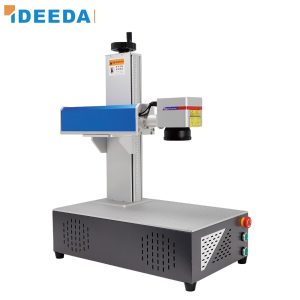
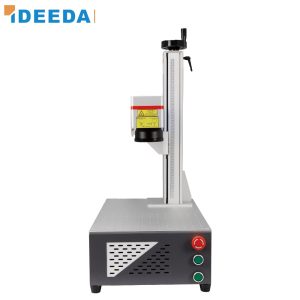
Fiber lasers are the workhorses of industrial metal marking. Operating at 1064nm wavelength, they excel at marking metals including stainless steel, aluminum, brass, copper, and titanium. Key advantages include maintenance-free operation (100,000+ hour source life), high-speed marking (up to 12,000mm/s), and deep engraving capability.
UV Laser Marking (355nm)
UV lasers use a 355nm wavelength — the cold marking technology. By tripling the frequency of a 1064nm source, UV lasers minimize heat-affected zones, making them ideal for plastics, glass, ceramics, and sensitive electronic components.
CO2 Laser Marking (10,600nm)
CO2 lasers operate at 10,600nm, making them perfect for non-metal materials like wood, leather, acrylic, paper, and textiles.
How to Choose
Metals → Fiber Laser | Plastics/Glass → UV Laser | Wood/Leather → CO2 Laser
Contact our team for free sample testing to determine the best solution for your specific materials.